NEW TO CODE
Made for players 12 and up. Start with a turtle and a small working program. Guided lessons and plain-word errors help you learn one idea at a time.
How the game teachesDIG, BUILD, AND PROGRAM
EVERY MACHINE YOURSELF.
A voxel survival and automation game. Mine, fight and craft by hand, then build pipes, power grids and factories. Program machines and robots in a Python subset, with new factory syntax unlocking as you climb the tech tree. You learn to program by building a factory.
In development · Release date and store links to be announced.
Hands first. Code when doing it by hand starts to hurt.
Punch trees, make tools, and build walls and a light before dark. Crawlers come out on dark ground at night.
Furnaces, pipes, cables, generators and machines. Every system works without code first: a lever can light a lamp.
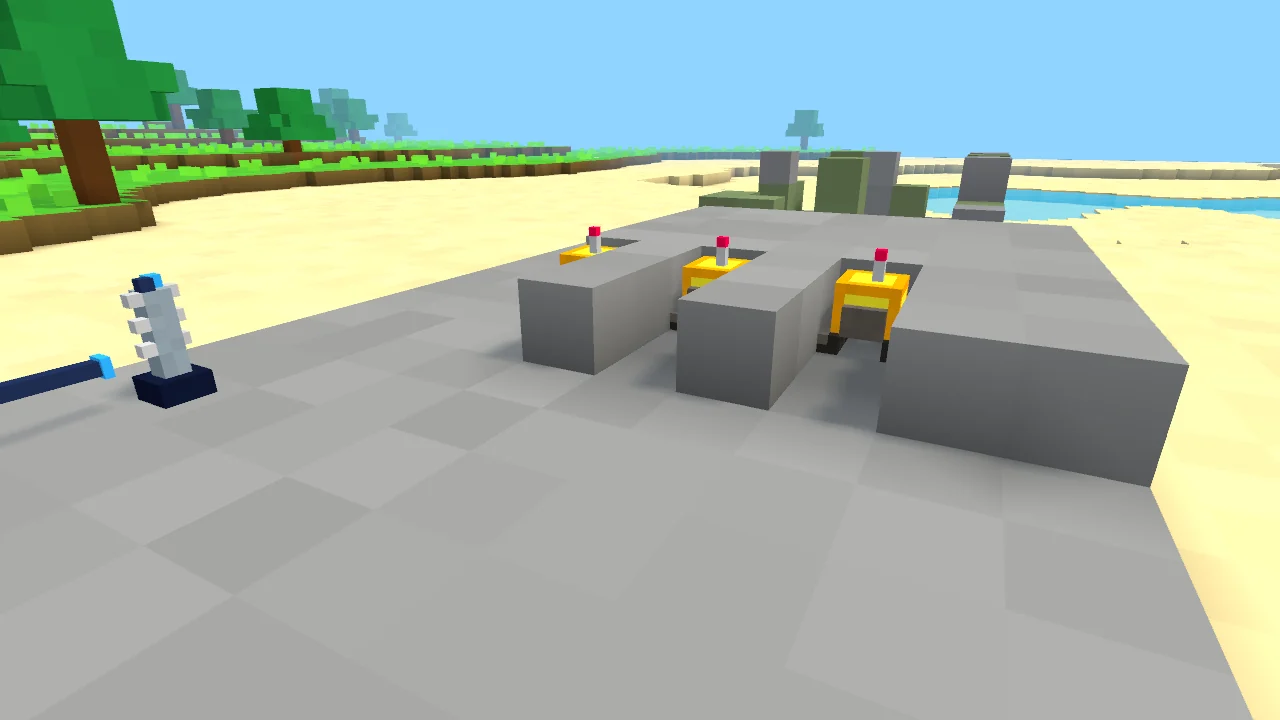
Start with a turtle, fuel and a pickaxe. Learn by making it act, then bring code to sorting, power, crafting and entire factories.
Robot turtles that dig and build, factories that talk over data cable, a storage network that crafts on request, and robot fleets.
Useful machine defaults get you started. Code lets you decide what to pull, when to process and where to push. The game runs a Python subset, with errors that explain what went wrong and where.
Press Step to watch a script run one line at a time. A token bar and suggestions show only the syntax you've unlocked, so you're never stuck staring at a blank page.
See the whole language# Grind whatever arrives pull(BACK) grind() push(FRONT)
New syntax is crafted, like a new machine. Each chip opens a piece of Python, and each piece makes a new kind of machine worth building.
pull() push()Calling functions, in order.x = x + 1Variables, numbers and text.if elif elseDecisions: sorting, fuel checks.for whileRepeat work: dig a whole tunnel.def returnName a behaviour, reuse it.[ ] { } inLists and dicts: recipes, stock.@on send()Events and messages between machines.class selfObjects, and firmware for robot fleets.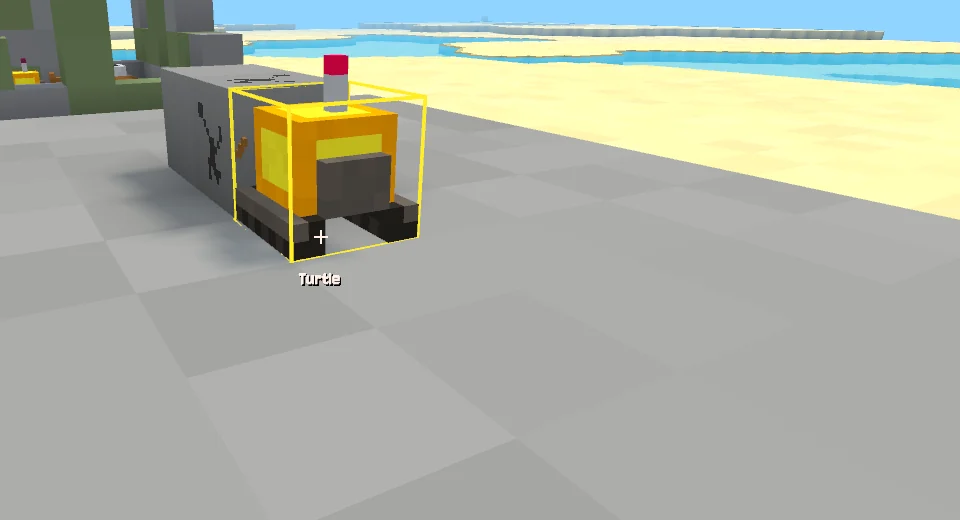
Give a turtle a pickaxe and a script and it clears tunnels, plants farms and fills chests. Add a Tool Arm, a Battery Pack, a Solar Panel or a Chunk Loader. Its script waits for each action, and carries on after you save and quit.
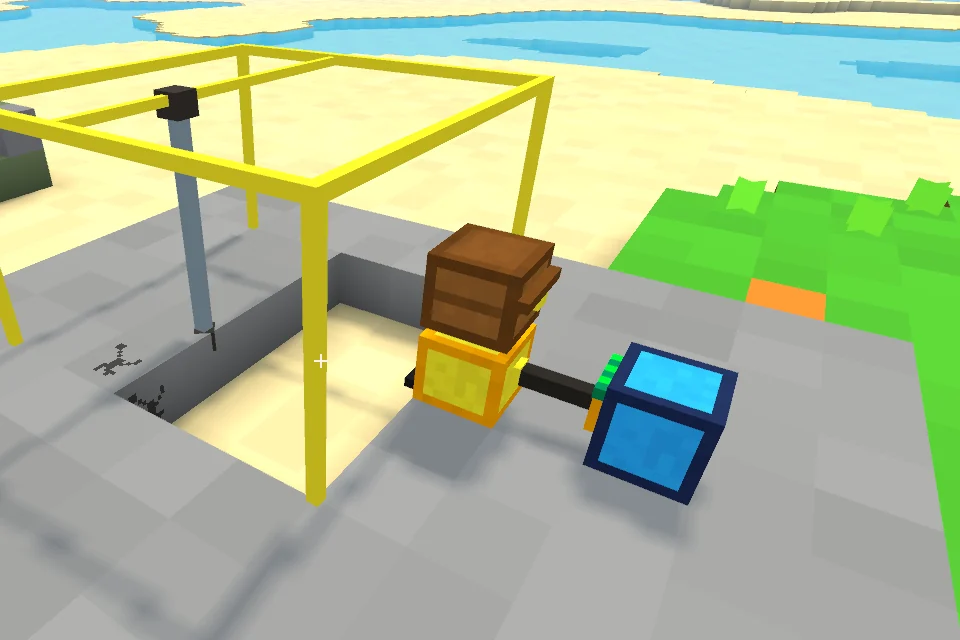
Item pipes, from wooden extraction to programmable sorting. Power tiers and transformers, where choosing the right cable matters. Macerators, furnaces, quarries and a crafter that takes recipes as lists. Classic tech-modpack depth, with code as the extra layer.
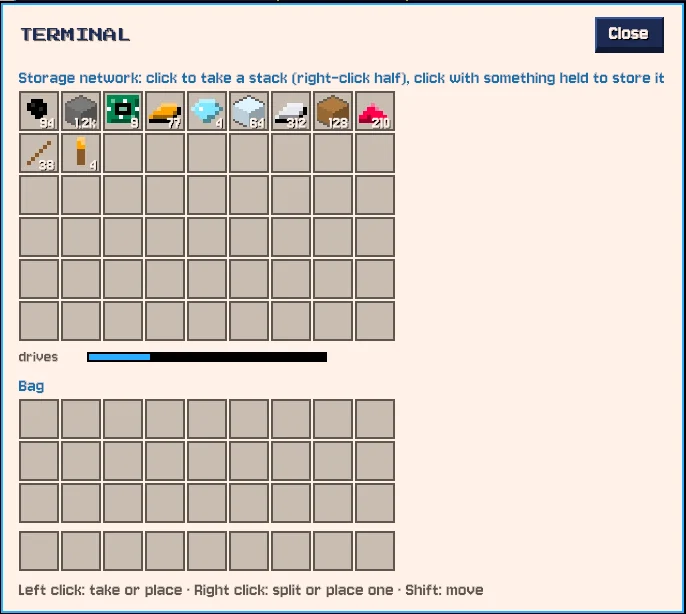
Data cable joins machines into a network. Scripts send messages and react to events with @on. A digital storage network holds thousands of items, and assemblers craft whatever a script asks for: net.craft("torch", 16).
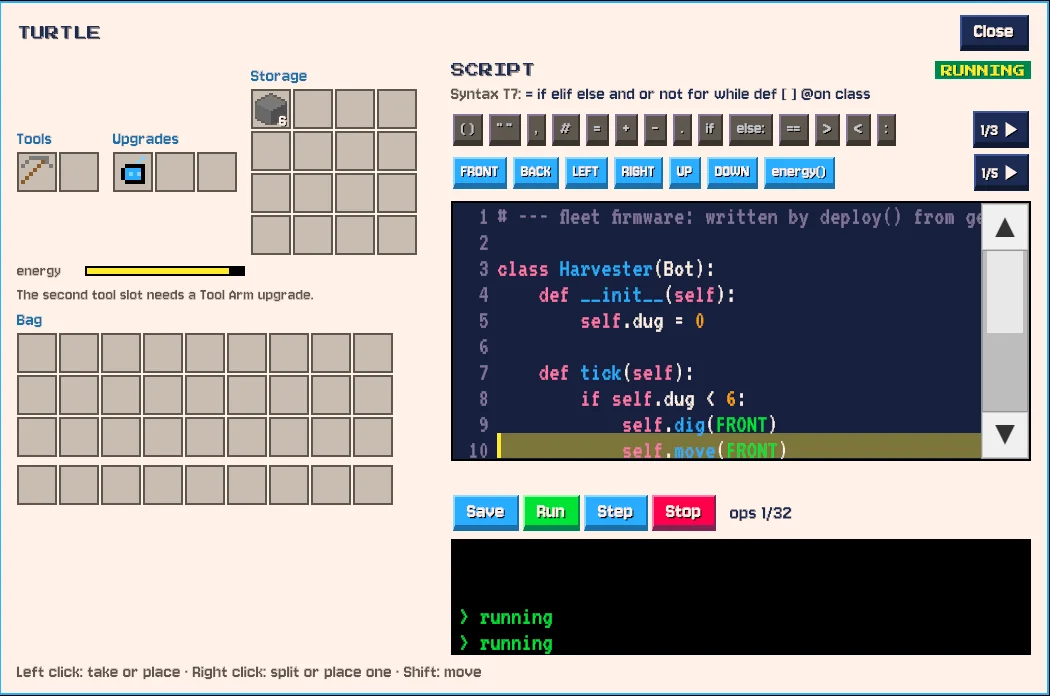
At the top of the language, classes become firmware. Write a Harvester once, deploy it to every robot with that name, and change it for all of them in one go.
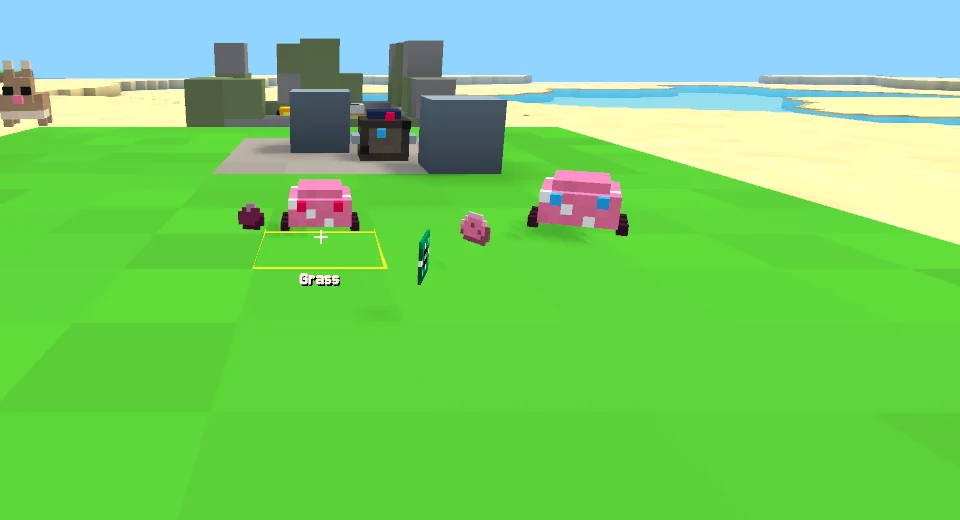
Seeded terrain with plains, forest, marsh, desert, highlands and ocean. Caves and ore by depth, ruins with broken machines, crashed drones and old mineshafts. Rabbits by day, crawlers by night, cave crawlers in the dark.
Each age adds a power tier, a cable or pipe, a storage step and new syntax.
TRAILER COMING SOON
Gameplay trailers, devlogs and tutorial videos will be posted here.
The game is in development. Screenshots on this site are real development captures. Visuals and features can change between builds.
Media & press kitMade for players 12 and up. Start with a turtle and a small working program. Guided lessons and plain-word errors help you learn one idea at a time.
How the game teachesOre processing, voltage tiers, pipe logistics, digital storage and autocrafting, in the spirit of the classic tech modpacks. Code is the extra layer, never a wall.
Read the guideReal Python concepts in order: functions, variables, conditions, loops, functions of your own, lists and dicts, events, classes. No accounts, and no internet needed to play.
For teachersYour field guide to the world, the factory and everything coming next.
Survival, robots, power and co-op. Find the next piece of your factory.
Open the wiki →Nine production milestones. See the targets and build toward the next one.
View achievements →What changed in each playtest, with clear platform and compatibility notes.
Read the latest →